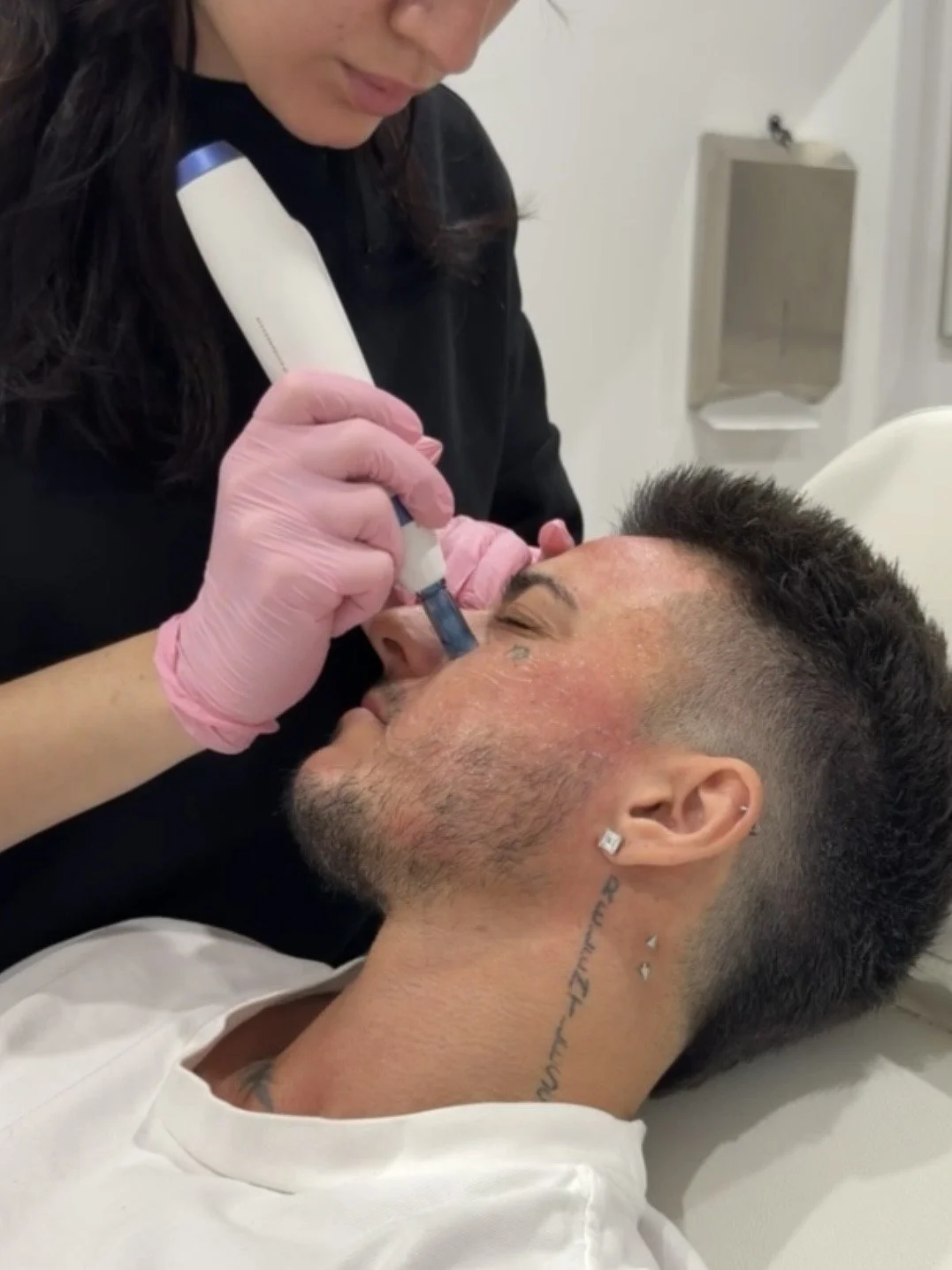
MICRONEEDLING / SKIN NEEDLING - MELBOURNE
Skin needling (also called microneedling) works by stimulating the skin's natural repair processes, making it useful for a range of concerns including scarring, skin texture, and overall skin quality.
It's one of the more versatile treatments available, and one for people who want gradual, long-term, evidence-based skin improvement, rather than a dramatic or obvious result.
Treatment is offered as a 4-session course, with pricing and planning discussed in your consultation.
Multiple sessions are required, as collagen formation is cumulative - like layering bricks to build a structurally sound house.
At NDI, skin needling is offered as part of a broader skin assessment. I look at your skin, your history, and your goals before recommending anything, and I’m honest when something else might serve you better.
Consultations are free, 30 minutes, and there's no obligation to proceed.
SKIN CONCERNS TARGETED VIA MICRONEEDLING:

-
Acne scarring can range from subtle texture changes to deeper marks, depending on the type of acne and how the skin healed.
Skin needling prompts the skin to remodel itself over time, which can improve the appearance of these marks.
Results are gradual and vary depending on scar type, depth, and skin history - all of which are assessed before any treatment is recommended.
-
Scars from surgery, trauma, or injury can not only affect appearance, but texture and movement of the skin.
Skin needling can be a useful part of scar management, particularly for scars that have matured past the initial healing phase.
Assessment involves looking at the scar's characteristics, age, and location to determine whether needling is appropriate, and what a realistic outcome might look like.
-
Stretch marks are a form of indented scar that occurs when the skin is stretched too rapidly and deeper layers tear.
Stretch marks are commonly associated with growth, pregnancy, or significant weight changes.
Skin needling can improve the texture and appearance of stretch marks over time, though results depend on their age, colour, and depth.
Older, lighter marks tend to respond differently to newer, more pigmented ones, and differing treatment approaches are required. This is discussed during consultation.
-
Not all skin concerns are about specific marks or scars. Some people simply notice that their skin looks rough, dull, or less resilient than it used to.
Skin needling can support overall skin quality, by encouraging the skin's natural renewal processes. It's a gradual approach, and it works best as part of a broader skin plan, rather than a standalone fix.
-
For those looking to support their skin's health over time without dramatic intervention, skin needling can be a useful tool.
It's not about changing features on your face, but supporting the skin you have so it can reflect more light, and signal a bright and healthy complexion.
Treatment is discussed in the context of your overall skin health, lifestyle, and what you're realistically hoping to achieve.
HOW MICRONEEDLING WORKS
A motorised pen device with fine needles is moved back and forth over the face in section. These needles rapidly move in and out of your skin, to create tiny tunnels through the skin's surface.
As well as triggering the skin’s repair response, these tunnels allow deep penetration of targeted products applied to the skin during treatment.
The treatment can cause mild discomfort in an ordinary beauty setting, however topical numbing cream is always used at NDI to maximise patient comfort.
Unlike most other skin needling providers who perform treatment with standard glide gels, NDI always pairs microneedling treatments with carefully selected topical treatments, to maximise the benefit to your specific concerns.
Topical add-on options include:
-
Your skin naturally produces growth factors, which are signalling proteins that tell your cells to repair, regenerate, and produce collagen.
As we age, this signalling slows down.
Growth factor microneedling pairs the needling process with a topical solution only available for use by medical practitioners.
Applied directly into the micro-channels created during treatment, these medical growth factors give your skin's repair response a meaningful boost at exactly the right moment.
The result over time is improved skin quality, smoother texture, and a more even, healthy-looking complexion.
This option is particularly well-suited to indented concerns, such as pitted acne scars, or gauges resulting from injury, as well as fine lines.
-
A topical multi-revitalising solution containing over 50 active ingredients, including hyaluronic acid, vitamins, amino acids, minerals, and coenzymes.
Rather than targeting one concern, it works across multiple layers of skin health simultaneously: improving hydration, supporting collagen and elastin production, refining texture, and restoring a healthy glow.
Delivering NCTF directly into the skin via the micro-channels created during needling, allows for epidermal absorption that wouldn't be possible through surface application alone.
The recommended protocol for NCTF is a touch more intensive, with three sessions spaced 2 weeks apart. A focused course of treatment, rather than a one-off, allows deeper penetration and cumulative effect.
NCTF is particularly effective for those wanting a comprehensive approach to skin quality, whilst also eliminating free radicals with essential vitamins and antioxidants.
-
Exosomes are tiny particles produced by stem cells. They carry growth factors, proteins, and signalling molecules that instruct surrounding cells to repair and regenerate.
The exosomes used at NDI contain a broad range of regenerative and anti-inflammatory factors, replicated from placental DNA coding.
In a placebo-controlled study, exosome microneedling produced significant improvements in skin tone, clarity, texture, pore appearance, pigmentation, and blood vessel appearance, compared to microneedling with saline alone. 75% of the treatment group reported they were extremely satisfied at 120 days, and no patients reported dissatisfaction at any point.
Exosomes’ anti-inflammatory properties mean they can help reduce post-treatment redness and active acne, to support a more comfortable recovery.
This option is well-suited to those with concerns around skin irritation, inflammation, or overall skin renewal and ageing.
-
Poly-D,L-lactic acid (or PDLLA) is a body-compatible material that stimulates your skin's collagen-producing cells to become more active.
In simple terms, PDLLA acts as a signal to your skin that repair is needed, prompting a gradual but sustained increase in collagen production over time.
Unlike treatments that add volume directly, PDLLA works with your skin's biology to build structural support from within.
When applied topically during microneedling, the micro-channels allow the PDLLA particles to reach the deeper layers of the skin where this stimulation occurs.
The improvements are progressive, with skin becoming firmer, smoother, and more resilient over a series of sessions.
This option is particularly suited to concerns around skin laxity, fine lines, pigmentation, and loss of structural quality.
THE TREATMENT PROTOCOL
Microneedling works best as a course of treatment rather than a single session. The standard protocol at NDI Cosmetic Nurse is four sessions, spaced four weeks apart.
This interval is intentional, as collagen remodelling is a slow biological process.
New collagen takes time to form, mature, and integrate into the skin's structure. Spacing sessions four weeks apart allows each treatment to build on the last, without disrupting the repair process that is still underway. Treating too frequently can interfere with this cycle, whilst leaving too long between the initial collagen-loading sessions means losing momentum.
By the end of four sessions, most clients see meaningful, cumulative improvement in their primary concern, whether that is scarring, texture, laxity, or overall skin quality.
Results continue to develop for several weeks after the final session as collagen remodelling completes.
Maintenance sessions can be discussed at your follow-up appointment based on your skin's response and your ongoing goals.
Following their initial 4-session course, many patients opt for single maintenance sessions at every 3 month, 6 month, or 12 month mark - or once they grow hungry for further hydration and glow.